What Thomas Actually Said
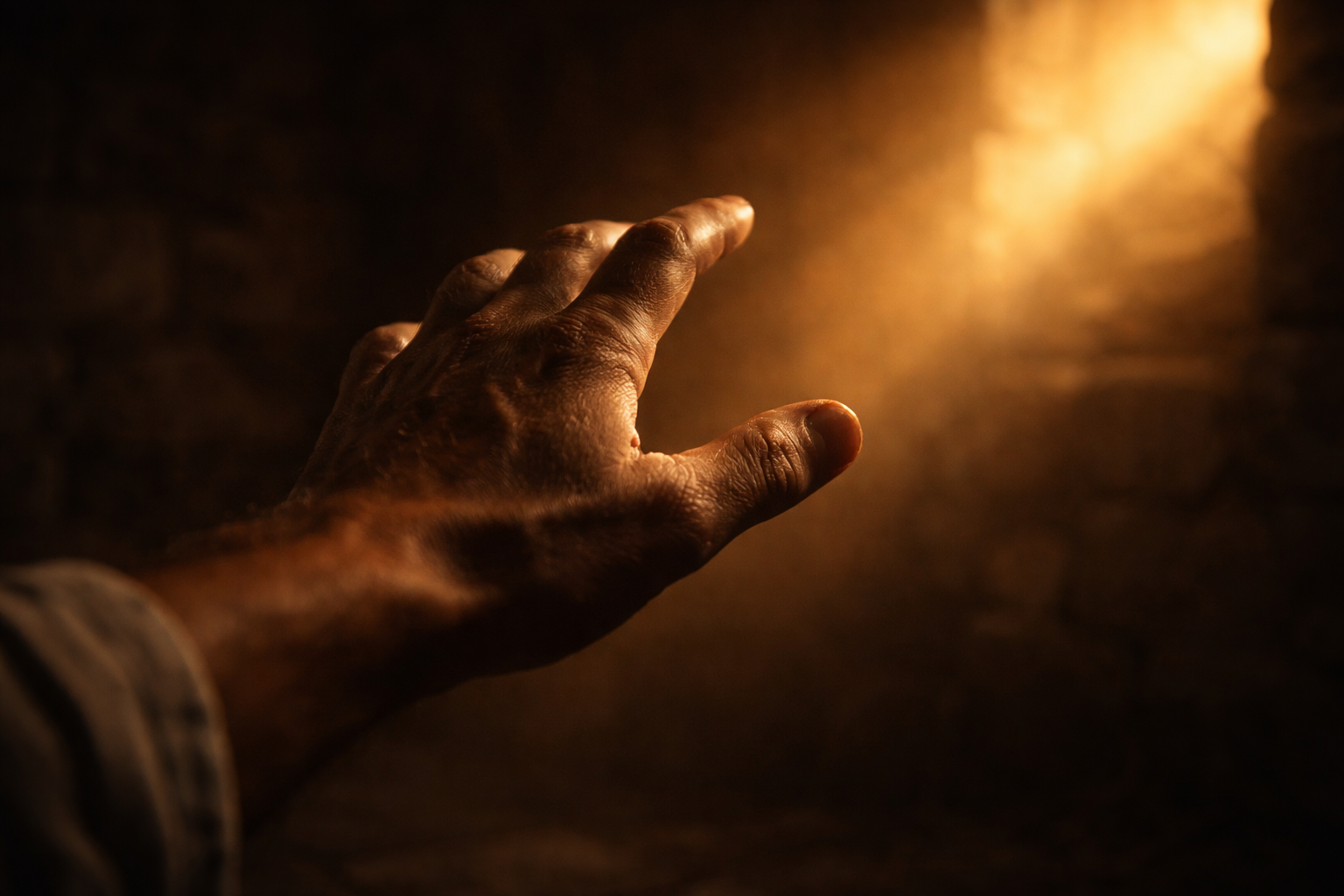
John 20:27-29 "Then he said to Thomas, 'Put your finger here, and see my hands; and put out your hand, and place it in my side. Do not disbelieve, but believe.' Thomas answered him, 'My Lord and my God!' Jesus said to him, 'Have you believed because you have seen me? Blessed are those who have not seen and yet have believed.'"
Flannery O'Connor was thirty-four years old, dying slowly of lupus on a Georgia farm, and writing the strangest, sharpest Catholic fiction in twentieth-century American literature. Her body was failing, but her output was extraordinary. And in 1959, she wrote a letter to a young woman named Louise who had confessed she was struggling to believe.
O'Connor did not tell her to try harder. She did not give her a list of apologetics resources. She wrote something almost nobody in the church was saying out loud: that the suffering of those who want to believe but cannot is one of the worst kinds of suffering there is, and that this very torment is, "the process by which faith is deepened."
Read that again. The torment is the process. The doubt isn't the obstacle to faith; it's the way faith grows up. A faith that just accepts everything without wrestling, O'Connor wrote, is a child's faith. Eventually you have to grow. And growing usually hurts.
Two thousand years before O'Connor sent that letter, a man named Thomas was wrestling in exactly the same way. We have nicknamed him for it.
Doubting Thomas. The phrase has become shorthand in English for skepticism, the person who needs proof before he commits. We use it almost as an insult. But look at what Thomas actually said when the other disciples told him Jesus was alive: "Unless I see in his hands the mark of the nails, and place my finger into the mark of the nails, and place my hand into his side, I will never believe" (John 20:25).
Notice what he wanted. He wanted what they had gotten. The other disciples had seen Jesus's hands. Had seen His side. Thomas had been absent that night. He was asking for the same evidence the other ten had received and now expected him to believe on their secondhand report. His doubt wasn't as much pride as it was longing dressed as resistance.
Eight days later, Jesus came back. The doors were locked again. He stood in the room and said the same words He had said the week before: "Peace be with you." Then He turned directly to Thomas and offered him exactly what he had asked for. "Put your finger here, and see my hands; and put out your hand, and place it in my side."
This is the part we miss. Jesus didn’t rebuke Thomas for asking. He came back specifically for this man. He crossed time and space and walked through a wall again so that one struggling disciple could put his hand on the proof he needed. The Lord of the universe accommodated a doubter.
And then Thomas said the most extraordinary thing in the entire Gospel: "My Lord and my God."
That confession is unique in the four Gospels. Nobody else, in any of the four accounts, calls Jesus God to His face. Peter called Him the Christ. The centurion at the cross said He was God's Son. But only Thomas, the one we mocked for two thousand years, looks at the risen Christ and addresses Him directly with the divine name. The doubter became the declarer. The man who needed evidence gave us one of the clearest confessions of Jesus’ deity in the New Testament. O'Connor was right: the wrestling was the way faith grew up.
Then Jesus said something for us: "Blessed are those who have not seen and yet have believed." Every reader of John since has been standing in that blessing. We are the ones who haven't put our hands in His side. We have believed without touching the scars. And Jesus calls that more blessed, not less. Our distance from the physical evidence isn’t deficit, but a category Jesus blessed in advance.
We carry doubts we are afraid to say out loud. The question we never ask in small group because we don't want anyone to think we are slipping. The wondering, late at night, whether any of this is true at all. The shame of having been a Christian this long and still needing the kind of reassurance we thought we had outgrown. We have been treating our doubt as a sin. Jesus treated Thomas’ as an invitation to show up. And O'Connor, dying on her farm, called it the very ground where faith grows.
The gospel here is not that we should try to doubt less. It is that the One we doubt is patient enough to come back, walk through walls, and offer His hands to anyone honest enough to ask. He’s never threatened by your questions. He has answers older than the questions are.
Today: Say Thomas’ confession out loud today, wherever you are: My Lord and my God. You don't need to have all your doubts resolved before you say it. Let the words be both an honest declaration and a prayer for the faith to mean them.
Prayer: "Jesus, You came back for Thomas. You walked through the wall a second time so one struggling man could put his hand on the proof. Forgive me for treating my questions as failures when You have always treated them as invitations. Thank You that You are not afraid of my honesty. I say it now, with all the faith I have: My Lord and my God. Help me mean it more deeply tomorrow than I do today. Amen."
-PK