Locked Doors, Open Wounds
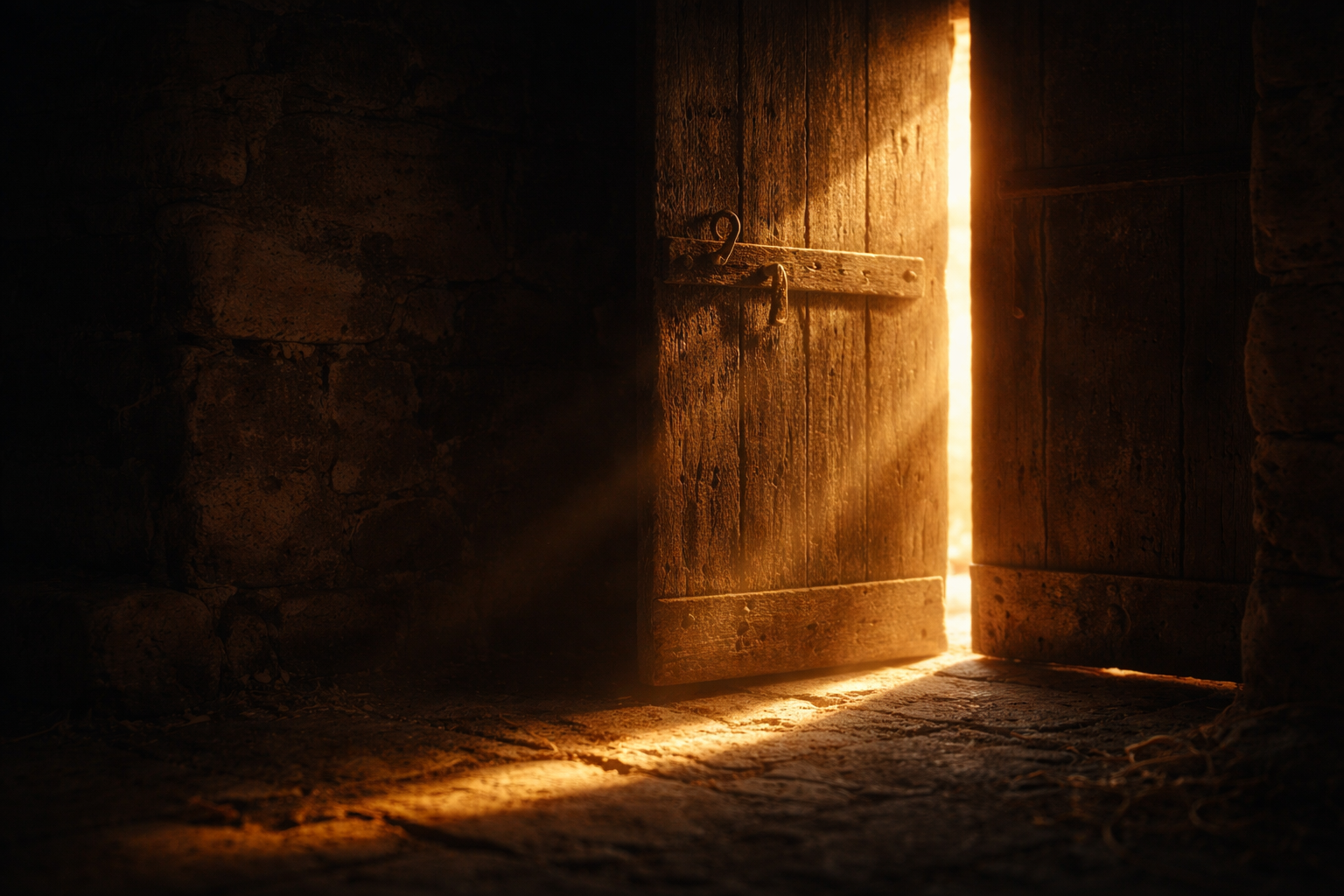
John 20:19-22 "On the evening of that day, the first day of the week, the doors being locked where the disciples were for fear of the Jews, Jesus came and stood among them and said to them, 'Peace be with you.' When he had said this, he showed them his hands and his side. Then the disciples were glad when they saw the Lord. Jesus said to them again, 'Peace be with you. As the Father has sent me, even so I am sending you.' And when he had said this, he breathed on them and said to them, 'Receive the Holy Spirit.'"
Frodo Baggins came home from his quest a hero. He’d carried the Ring into the heart of darkness, watched it destroyed, and saved the Shire. The Fourth Age had begun. The world was free. And Frodo, by every reasonable measure, should have walked back into his old life and lived happily into a long hobbit retirement.
Tolkien wouldn't let him.
In the chapter "Homeward Bound," Frodo rides quietly beside Gandalf and admits the wound from the Morgul blade at Weathertop is still aching. The body had healed, mostly. The memory of the darkness had not. Gandalf looks at him with that gentle Wizard sadness and says, "Alas! there are some wounds that cannot be wholly cured."
Frodo agrees. "There is no real going back," he tells Gandalf. "I shall not be the same." He arrives home, finds Bag End restored, sits at the table where his uncle once sat, and discovers that the place he saved cannot save him. He has carried something so dark that ordinary life can no longer hold him. Eventually he sails for the Grey Havens, looking for a healing Middle-earth cannot offer.
Tolkien knew what most heroes pretend not to know: there are wounds you carry home from the war, and they do not go away just because the war is over. Some doors get locked from the inside not because we are cowards, but because we have been hurt in places that simple time will not mend.
On the evening of resurrection day, the disciples were locked in a room. John tells us why: for fear of the Jews. The same religious authorities who had condemned Jesus could come for them next. So the disciples who had walked with Jesus for three years were behind a bolted door, listening for footsteps in the hallway. They had their own Weathertop. They had seen things they could not unsee. The locks were not just about safety; they were about a kind of grief that doesn't have anywhere to go.
And Jesus walked through the wall.
John doesn't say He knocked. Doesn't say He opened the door. He just appeared. The locked room was not an obstacle. The same body that had walked out of a sealed tomb walked through a sealed door, and the first words out of His mouth were not a rebuke. They were "Peace be with you."
Then He showed them His hands and His side.
This is where the Frodo image breaks open into something better. The risen Christ did not arrive unmarked. The wounds were still there, the nail prints still in His hands, the spear gash still in His side. He had defeated death, and He brought the receipts. But unlike Frodo's wound, His scars were not aching evidence of damage that would never heal. They were credentials. Tokens of victory. Proof that the worst the world could do had been absorbed and overcome.
Isaiah saw it seven hundred years before: with his wounds we are healed (Isaiah 53:5). The wounds aren't the past. They are the means. The same hands that bear the marks of crucifixion are the hands that breathe peace into a locked room.
We know about locked doors. Most of us aren't hiding from religious authorities, but we have rooms in our lives we have sealed shut after the last time something cost us. The friendship we won't risk again. The ministry we stepped back from after we got hurt. The vulnerability we shut down because we couldn't survive being that exposed twice. Like Frodo, we are carrying something the parade didn't see, and we have called our hiding wisdom.
And the gospel news is that locks have never stopped Jesus. Not the stone over the tomb. Not the door in Jerusalem. Not the one you bolted last year. The same Christ who walked into the upper room walks into the rooms we have sealed, and He brings His wounds with Him. The people inside the locked room need to know that the One offering them peace has been to the worst place imaginable and come back alive. Not in spite of the wounds. Through them.
That is when He commissioned them. "As the Father has sent me, even so I am sending you." Then He breathed on them and gave them the Spirit. Notice the order. Peace first. Then sending. Then power. He stood in their cell, gave them His peace, showed them His wounds, and only then commissioned them. The equipment for the mission came from His breath, not their bravery.
Frodo had to leave Middle-earth to find healing. The disciples had healing walk into the room they could not leave. That is the difference the resurrection makes. The wounds you have been hiding behind locked doors are not disqualifications in His hands. They become the very places His peace enters and the very testimony He sends you out to give.
Today: Name the door you've locked. Tell God what you’re hiding from. Then ask Him to stand in the room with you and say what He said in Jerusalem: Peace be with you. The wounds you carry home are not the end of the story. In Jesus's hands, they become credentials.
Prayer: "Jesus, You are the wounded, risen King who walks through locked doors. I worship You for not arriving unmarked. The scars in Your hands tell me You know what it costs. Breathe Your Spirit into the rooms I have sealed shut. Send me out as one whose wounds are no longer prisons but witnesses. In Jesus’ Name, Amen."
-PK