More Than a Meal
1 Corinthians 8:1–2 - “Now concerning food offered to idols: we know that ‘all of us possess knowledge.’ This ‘knowledge’ puffs up, but love builds up. If anyone imagines that he knows something, he does not yet know as he ought to know.”
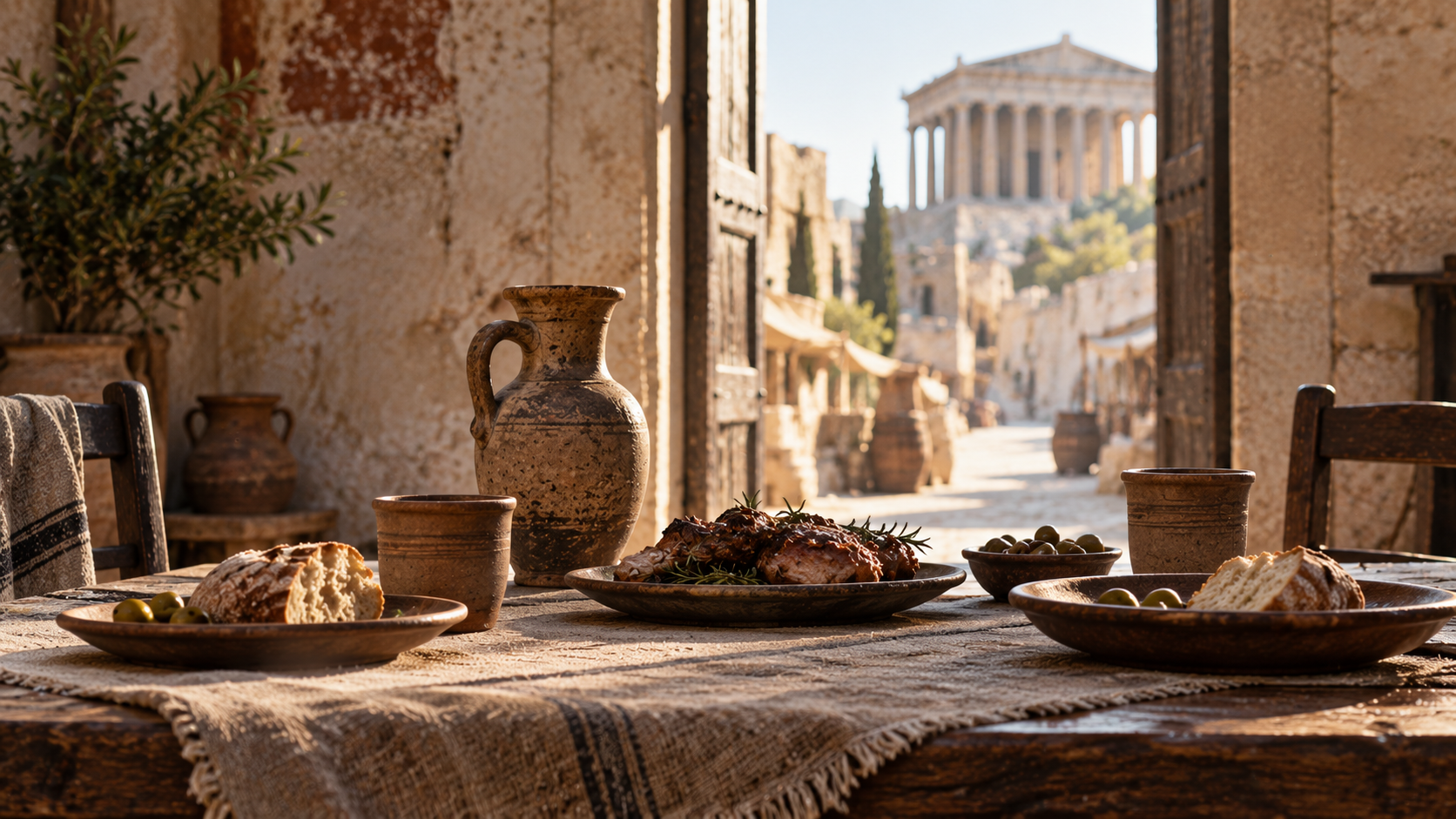
An invitation to dinner could raise a difficult question for a Christian in Corinth: What would eating this meal mean? Worship of the city’s gods was woven into ordinary life. Meat offered in sacrifice could be served at temple meals or later sold in the marketplace. So, following Jesus meant learning how to live among neighbors, relatives, and coworkers whose lives still revolved around gods you no longer worshiped. Even a familiar meal could bring your old life close again. Some believers had settled the question in their minds. There was only one true God. An idol had no power to change a piece of meat. They understood that food could neither earn God’s favor nor take it away. But imagine someone sitting beside them who had recently left that worship behind. The setting, the food, the associations… all of it carried meaning. Seeing a more confident Christian participate could encourage that person to join in while still believing they were being unfaithful to Jesus.
The confident believer saw dinner. The troubled believer felt the pull of a former allegiance. That’s the situation behind this chapter. This is a church learning what belonging to Jesus means for the way believers treat one another. Their questions concern food and idols, but underneath those questions lies something familiar: How much should another person’s spiritual good matter when I decide what to do with my freedom? Paul gets beneath their disagreement about dinner to the way they have begun seeing one another: “Knowledge puffs up, but love builds up.” Some believers understood that an idol was nothing, but they were using that understanding to dismiss people whose consciences were still troubled. They could explain why they felt free to eat without stopping to consider what their example might lead someone else to do.
We can do the same. We learn a truth, recognize that someone else hasn’t grasped it, and begin to feel superior. Instead of patiently helping them understand, we grow irritated that they still have questions. Before long, we’re treating someone Christ loves as an obstacle to something we want. The truth we’ve learned should help us care for that person. Instead, we’ve made it a reason to look down on them. You can hear it in the way we speak: “I don’t see why this is such a big deal.” Perhaps we really don’t see. Perhaps there’s a history we haven’t heard, an association we don’t understand, or a conscience we’re about to pressure. Paul’s next sentence leaves room for humility: “If anyone imagines that he knows something, he does not yet know as he ought to know.” Knowing as we ought includes understanding that we don’t know it all and recognizing how truth should shape our treatment of people. A correct answer can still be spoken with contempt. A legitimate freedom can still be exercised carelessly.
Jesus knows us more fully than anyone ever will. He sees every confused conviction, every hidden motive, every place where we’ve used the truth to make ourselves look bigger. Yet He moved toward us and gave Himself for us. That means we can face what this passage exposes without scrambling to defend ourselves. Our standing with God rests in Christ. We can admit that we’ve been careless. We can ask another question. We can receive correction without losing who we are. And the Jesus who gave Himself for the person beside us now lives in us. His love supplies what our knowledge alone never could: a desire to see that person flourish in faith. Before the next conversation about what you are free to do, linger over that person’s worth to Him.
Head: Knowing as I ought means caring about how my choices affect another believer’s faith.
Heart: Whose hesitation have I dismissed without taking time to understand it?
Hands: Ask a believer whose convictions differ from yours, “Can you help me understand what concerns you?” Give their answer your attention.
Prayer: “Lord Jesus, forgive me for using what I know to feel superior or excuse my carelessness toward others. Settle me in Your grace so I can listen, learn, and receive correction without defending my importance. Live Your patient love through me today, giving me a deeper concern for the faith of the people around me. Amen.”
-PK