Two Tables
Luke 19:5-7 — “And when Jesus came to the place, he looked up and said to him, ‘Zacchaeus, hurry and come down, for I must stay at your house today.’ So he hurried and came down and received him joyfully. And when they saw it, they all grumbled, saying, ‘He has gone in to be the guest of a man who is a sinner.’”
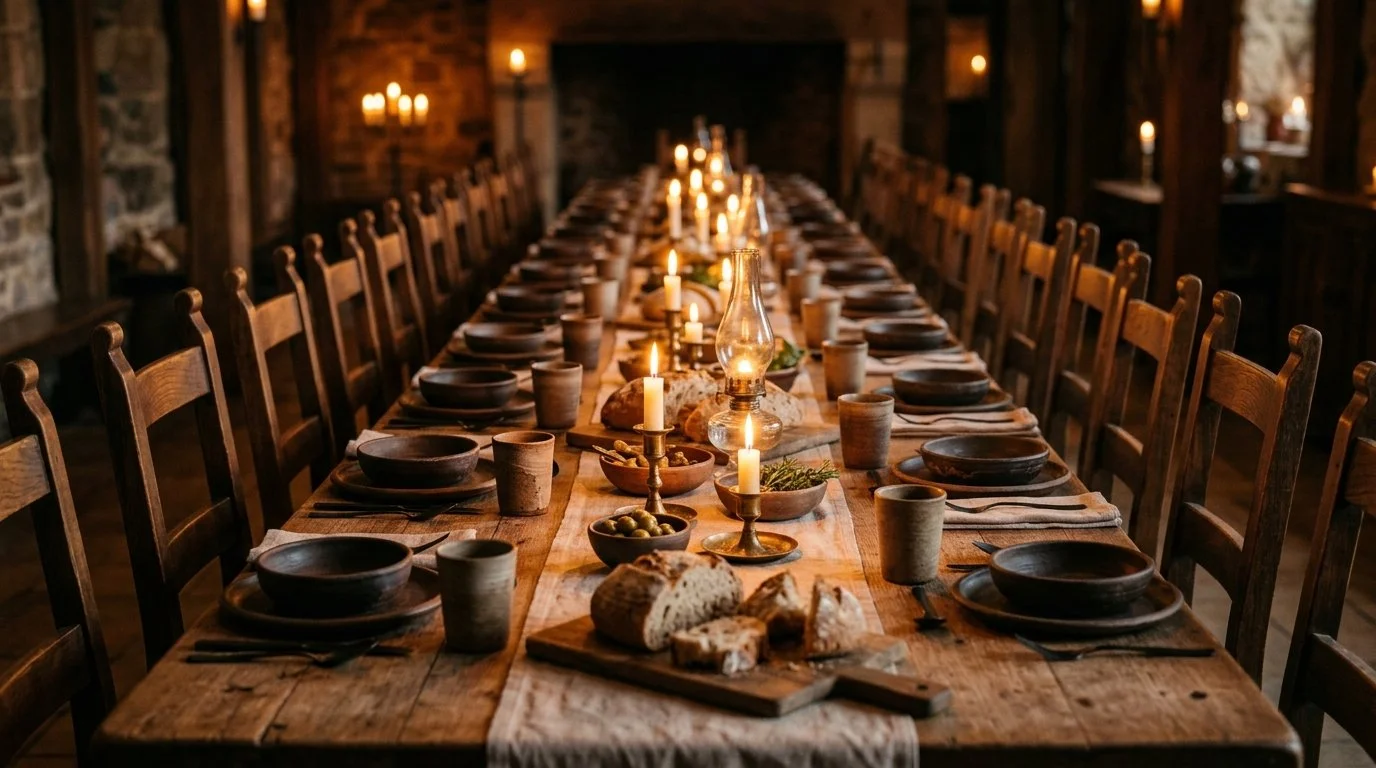
Imagine the table that night.
The dishes are borrowed. Zacchaeus probably sent a servant scrambling to the market while Jesus was still walking through the front door. Nothing about this meal was planned. There’s no guest list, no seating chart, no time to stage the house the way you’d stage it for a rabbi. It’s rushed and real and slightly chaotic, the way the best meals always are.
And then picture who’s sitting there. A chief tax collector whose neighbors wouldn’t spit on him if he were on fire. A rabbi the entire city came out to see. And between them, a table set with whatever was available on short notice.
The crowd outside is still grumbling. You can almost hear it through the walls. “He has gone in to be the guest of a man who is a sinner.” They can’t believe it. Every respectable person in Jericho would have hosted Jesus gladly. The synagogue leaders. The prominent families. The people who’d earned the honor. And Jesus chose this house. The one everyone avoids. The one whose money was stolen from their own pockets.
In first-century Jewish culture, table fellowship was a declaration. Sharing a meal meant identification. It meant, “I am with you. I belong to you. Your table is my table.” Rabbis were especially careful about who they ate with because the meal itself was a theological statement. When Jesus walked into Zacchaeus’s house and reclined at his table, He was saying something louder than any sermon: this sinner belongs to me, and I am not ashamed to be associated with him.
That’s the scandal the crowd couldn’t swallow. Not just that Jesus visited, but that He ate. He lingered. He identified.
Now fast-forward a few days. Jesus is in Jerusalem. The Passover lamb has been prepared. And in an upper room, Jesus hosts His own meal. He takes bread, breaks it, and says, “This is my body, which is given for you. Do this in remembrance of me” (Luke 22:19). He takes the cup and says, “This cup that is poured out for you is the new covenant in my blood” (Luke 22:20).
Two tables. Same Jesus. Same pattern.
At Zacchaeus’s table, Jesus walked into a sinner’s home uninvited and brought salvation with Him. At the Passover table, Jesus offered His own body and blood to a room full of men who would abandon Him before sunrise. One of them would betray Him. Another would deny knowing Him three times. And He served them all.
The table is where Jesus does His most intimate work. It’s where reputation dies and grace feeds. Where the grumbling crowd stays outside and the undeserving are invited to sit. Where a God who has every right to eat alone instead breaks bread with people who don’t deserve to be in the room.
This morning, you’ll gather with people who are just as undeserving as Zacchaeus. Just as prone to betrayal as the twelve. Just as likely to grumble at who else showed up. And Jesus will host the table again. He always does.
But here’s what’s easy to miss when you’ve been coming to this table for years. Familiarity dulls the scandal. We walk in like we’ve always belonged, and we forget that we didn’t. We’re here because a rabbi looked up into the tree we were hiding in and said, “Hurry and come down.” We’re here because He chose us publicly, scandalously, in front of everyone who thought we didn’t deserve it.
The table this morning isn’t for the polished. It’s for the Zacchaeuses. The ones who climbed a tree just to catch a glimpse and got called by name instead. The ones who showed up with borrowed dishes and a messy house and heard, “Salvation has come.”
And if you look around the room today, you might notice someone sitting on the edge. Someone who looks like they’re not sure they belong. Someone the crowd might grumble about. See them the way Jesus saw Zacchaeus. Because the table has room. It always has.
Application: As you gather for worship today, look for the person on the edge. The one who looks unsure, uncomfortable, or alone. Welcome them. Sit with them. Be the voice that says, “There’s room here.” That’s what Jesus did, and He’s asking you to do the same.
Prayer: “Jesus, You chose a tax collector’s table over every respectable house in Jericho. You served bread and wine to men who would abandon You hours later. Thank You for a grace that doesn’t check credentials at the door. Help me see the people on the edge today and welcome them the way You welcomed me. Make our table look like Yours. Amen.”
-PK