The Room Before the Rush
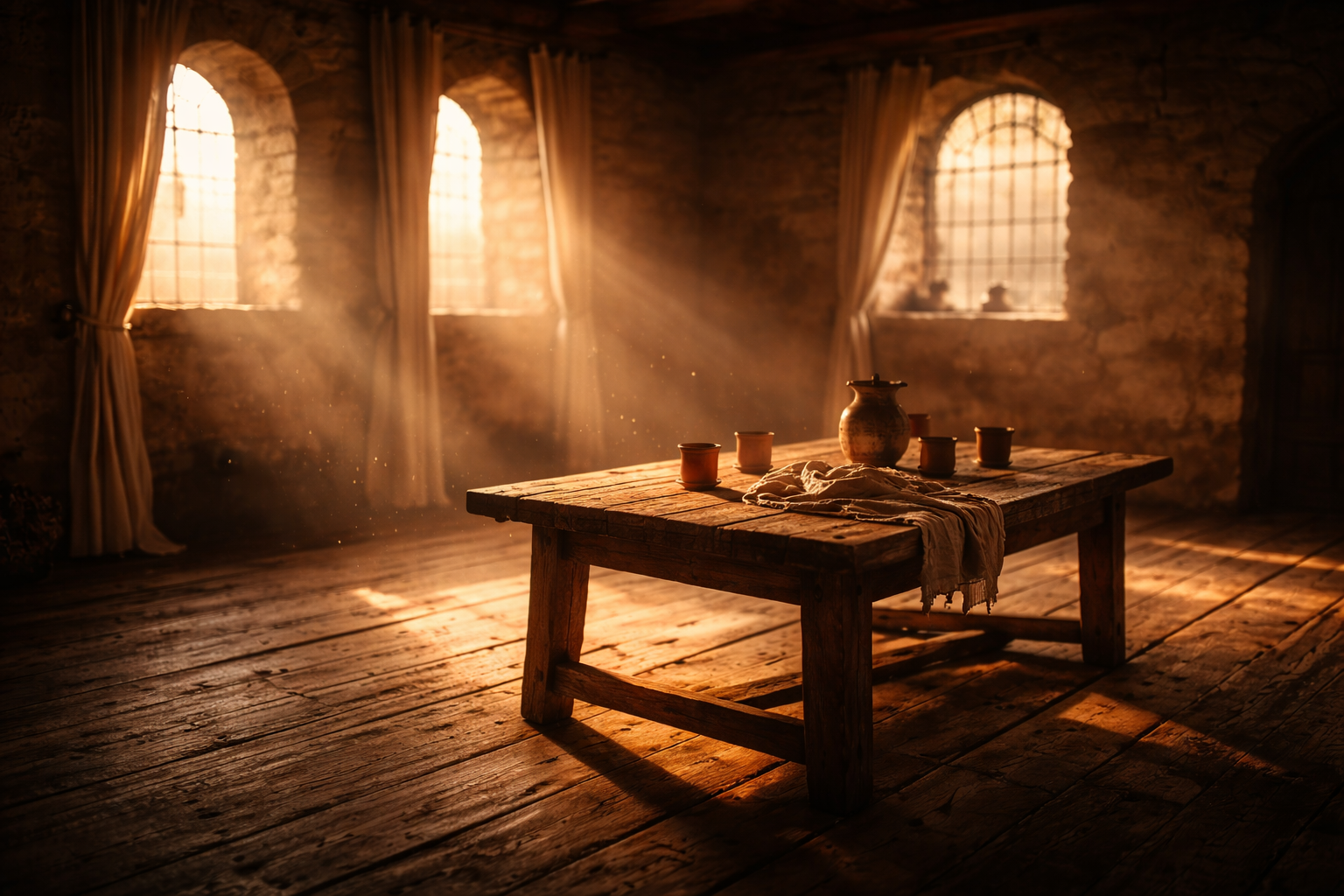
Acts 1:12-14 "Then they returned to Jerusalem from the mount called Olivet, which is near Jerusalem, a Sabbath day's journey away. And when they had entered, they went up to the upper room, where they were staying... All these with one accord were devoting themselves to prayer."
On the evening of May 24, 1738, an Anglican priest named John Wesley reluctantly walked to a small religious meeting on Aldersgate Street in London. He did not want to go. He was thirty-four years old, ordained, well-educated, and spiritually exhausted. He had spent years trying to earn an assurance of salvation through discipline and effort, including a failed mission trip to Georgia, and he had nothing to show for it but more striving. He went because his friends made him.
It was an ordinary room. A handful of people. Someone was reading aloud from Martin Luther's preface to the book of Romans. Wesley took his seat near the back, expecting nothing.
At about a quarter before nine, while the reader was describing the change God works in the heart through faith in Christ, something inside Wesley shifted. He wrote about it in his journal that night in a sentence that has been quoted in churches ever since: "I felt my heart strangely warmed." He felt, for the first time, that he trusted in Christ alone for salvation. The years of striving collapsed into a moment of receiving. The global Methodist movement, eventually millions of people across centuries, traces its origin to that small gathered room and that quietly warmed heart.
The room was nothing remarkable. Just people gathered, waiting, listening to Scripture. The Spirit did the rest.
Almost two thousand years before Wesley sat in that London meeting, another small group was sitting in another upper room. They had just watched Jesus ascend. The angels had just told them to stop staring at the sky. So they walked back into Jerusalem and went upstairs to the room where they had been staying, and they did the only thing that made sense: they waited together.
Luke says about a hundred and twenty of them gathered there. The eleven disciples. Mary the mother of Jesus. The other women who had followed Him from Galilee. His brothers, who had not believed in Him during His earthly ministry but believed now. They had no five-step launch plan for the church. They had a promise from Jesus that the Holy Spirit was coming, and they had no idea what that would look like.
So they prayed. Luke describes them with one of the most beautiful phrases in Acts: "All these with one accord were devoting themselves to prayer" (Acts 1:14). They sat in the room and waited for what they could not produce.
And here is the detail we shouldn’t miss: the upper room is, by long Christian tradition, the same room where Jesus had broken bread with them on the night He was betrayed. The room of the Last Supper. The room where Judas had dipped his hand in the dish. The room of the failed promise to never deny Him. They went back to the room where things had fallen apart, and they waited there for God to do something new in the same space.
That is how grace works. It doesn’t relocate you to a fresh start. It returns to the room where you fell down and redeems it.
Ten days later, the Spirit fell. Pentecost broke open the door of that upper room and three thousand people believed in a single afternoon. Peter, who had wept beside a charcoal fire, stood up in the streets of Jerusalem and preached to the same city that had crucified the Man he had denied. The room of the Last Supper became the room of the launching of the church.
But here is the strangest, most beautiful thing about reading this story today. We aren’t waiting like they were waiting. The Spirit has already come. Pentecost has already happened. The promise the 120 were praying for has been fulfilled, and the Spirit they were asking God to send is the Spirit who already lives in every believer. Christ in you, the hope of glory (Colossians 1:27). The room before the rush is two thousand years behind us. We are the rush!
This morning we worship as people who carry inside us what they were begging God to send. The Christian life isn’t waiting for God to show up. He has already come. The Christian life is learning to walk by what we’ve already been given.
That is the exchanged life Paul described when he said, "It is no longer I who live, but Christ who lives in me" (Galatians 2:20). The mission Bonhoeffer carried into Germany. The forgiveness that flooded down Corrie's frozen arm. The peace that walked through the locked door for the disciples. The breakfast Jesus cooked for Peter. None of that came from human strength. All of it came from the Spirit who arrived at Pentecost and never left.
Wesley walked into Aldersgate Street unwilling. He walked out as a man whose life would change the spiritual face of the English-speaking world. The Spirit didn’t arrive that night; He had been there since Pentecost. Wesley just finally received what was already on offer.
So today, we are the people the upper room was praying for. The Spirit has come, the work is done, and the King is seated. We are not waiting. We are sent, filled, and loved. He is risen, He is reigning, and He is in us.
Today: Enter worship today as someone who already has what the 120 were waiting for. Sing as someone the upper room was praying for. The Spirit who came at Pentecost hasn’t left. He is the engine of every step you have taken this week, and He is what makes the next one possible.
Prayer: "Father, I worship You today as one who carries the Spirit. Thank You for not leaving me as an orphan. Thank You for the Spirit who lives in me, who has been carrying me all along, who is the engine of everything I have ever done in Your name. I confess I have so often tried to live this life in my own strength when You have already given me Yours. Help me today to walk in the freedom of what is already true: it is no longer I who live, but Christ who lives in me. In Jesus’ Name, Amen."
-PK