The Fence That Sets You Free
James 1:25 "But the one who looks into the perfect law, the law of liberty, and perseveres, being no hearer who forgets but a doer who acts, he will be blessed in his doing."
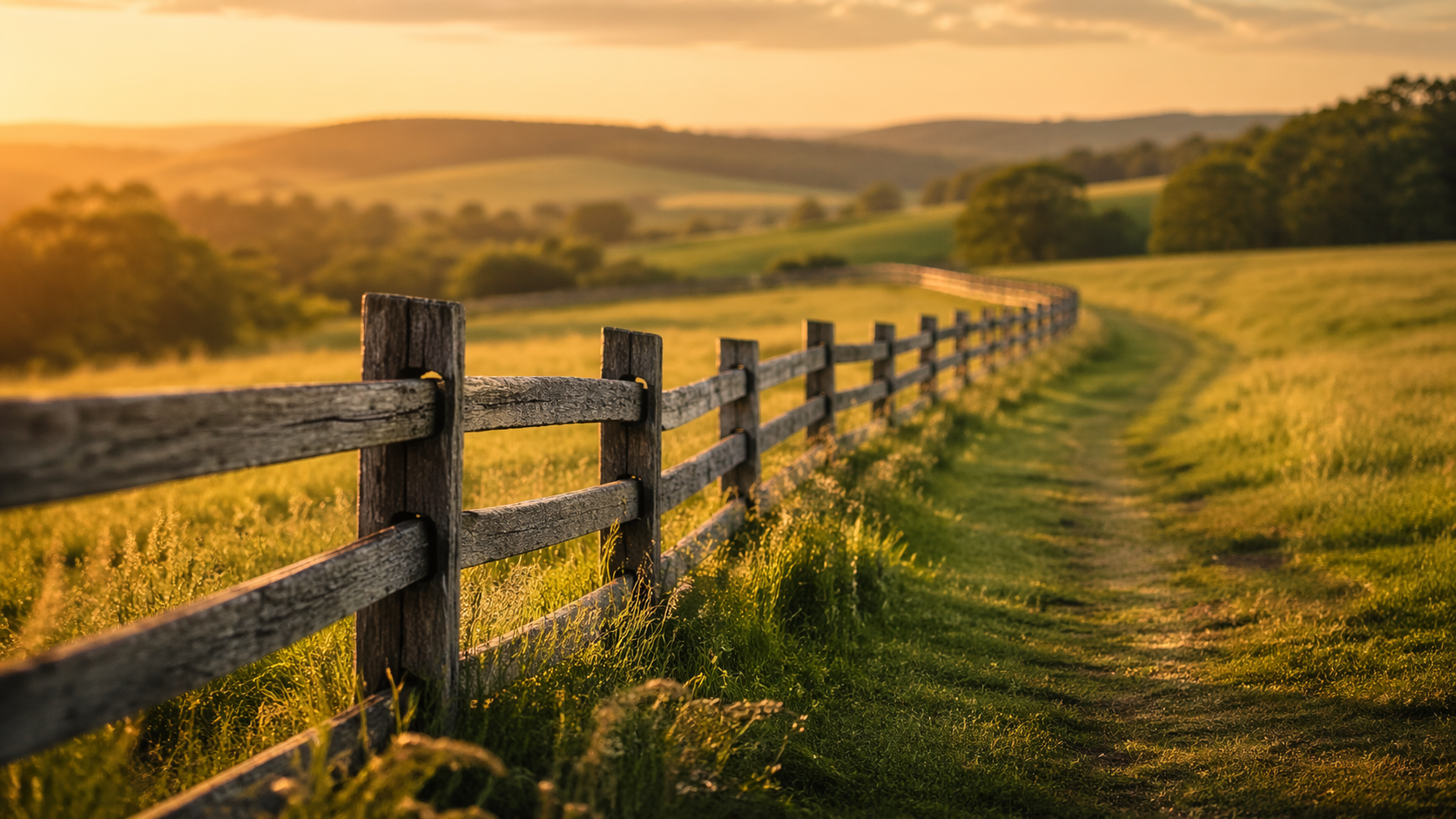
In 1929, G.K. Chesterton published a collection of essays called The Thing. Tucked into a chapter titled The Drift from Domesticity, he told a small parable that has become one of the most quoted thought experiments of the twentieth century. Imagine, Chesterton said, a fence across a country road. No obvious use. No sign explaining its purpose. Two reformers come upon it. The first says, I don't see the point of this; let us clear it away. The second answers, if you don't see the use of it, I certainly won't let you clear it away. Go and think. When you come back and can tell me why it was built, I may let you tear it down.
The point was simple. Fences don’t grow there. Somebody built that fence. Somebody had a reason. And until you know the reason, your confident tearing down might just be the most ignorant thing you ever do.
What Chesterton was defending, gently and unmistakably, was the quiet wisdom of inherited constraint.
Read James 1:25 with that parable in mind. "But the one who looks into the perfect law, the law of liberty, and perseveres..." Go slowly over that phrase. The perfect law. The law of liberty. James has just set two words beside each other that every modern instinct in us wants to pry apart. Law sounds like restriction. Liberty sounds like freedom. And James is telling us, without embarrassment, that the law of God is the freedom of God.
We live in a culture that has spent two hundred years assuming that freedom is the absence of constraint. Tear down the fence. Remove the law. Throw off the old boundaries that nobody alive remembers building. Find yourself. Be yourself. Rules are cages, and cages are for birds that don’t know they can fly.
James and the whole Bible assume the opposite. Freedom isn’t the absence of constraint; freedom is the right constraint. A river is free only inside its banks. Outside them it’s a flood, drowning crops and houses and children. A train is free only on its tracks. Off them it becomes wreckage. A musician is free only inside the discipline of scales and time signatures. Without those, all you have is noise. And a human life is free only inside the commands of God, because those commands are the very banks and tracks and time signatures our Creator designed us to run inside.
This changes how we read the hard verses.
When Scripture tells us to forgive those who have hurt us (Matt 6:14-15), that isn’t a fence God put up to deprive us of the pleasure of our grudge. That is a fence He built because He knows what unforgiveness turns us into. When Scripture calls us to sexual faithfulness, to honesty in our speech, to generosity with our money, to the sacrificial love of our spouses, to honoring our parents, these aren’t arbitrary fences that some ancient and out-of-touch God set across our road. These are banks He built because He knows where the flood of our desires would carry us. Jesus said it Himself: "If you abide in my word... you will know the truth, and the truth will set you free" (John 8:31-32). Abiding in Him, inside His Word, is where freedom lives.
The gospel underneath this is so very sweet. The Christ who perfectly kept every command of the Father and lived the only truly free human life in history has united us to Himself. We don’t obey His law to earn freedom. We obey it because we’ve already been freed! Paul puts it bluntly: we are not under law but under grace, and it is precisely grace that teaches us to walk inside the only tracks a free life can run on (Rom 6:14; Titus 2:11-12).
Most of our spiritual restlessness is the result of climbing over fences God built for our joy. The affair we’re nursing in our imagination. The financial decision we know is shading the truth. The tongue we can’t rein in. The anger we can’t put down. The Sabbath we can’t bring ourselves to honor because it feels like lost productivity. Every one of those fences, if we stopped long enough to ask why it was built, would turn out to be a boundary God set there so we could actually run.
Today: Name one command of Scripture today that you’ve been resisting. Write it down. Underneath it, write what you think that fence might be protecting. You may not know yet. Sit with the question. The God who put the fence there is gentle; He isn’t going to shame you for asking why.
Prayer: "Father, I worship You for commands that aren’t cages but banks for the river of my life. Thank You for a Christ who walked every one of them perfectly and opened the gate wide for me. Open my eyes today to the freedom hidden inside Your Word and help me run gladly inside Your boundaries. In Jesus' name, Amen."
-PK