Once an Infidel and Libertine
1 Corinthians 1:2 "To the church of God that is in Corinth, to those sanctified in Christ Jesus, called to be saints."
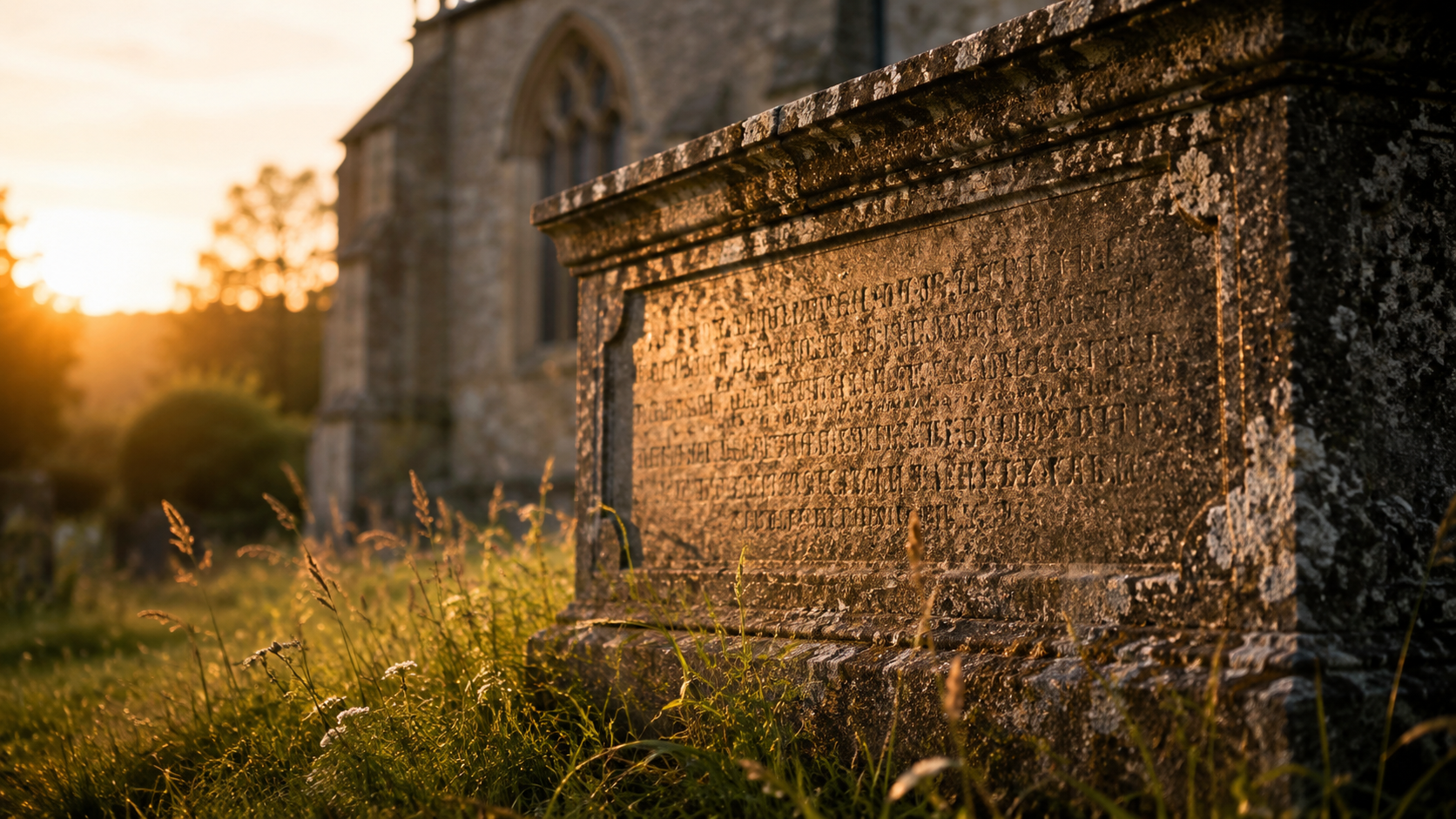
In the parish church of Saints Peter and Paul in Olney, Buckinghamshire, England, there’s a stone tomb in the northeast corner of the churchyard. The inscription on the south face is the epitaph John Newton wrote for himself before he died on December 21, 1807, at the age of 82. The tomb was added in 1893 when his remains were moved from St. Mary Woolnoth in London. The words are still there, etched in capital letters into the stone.
"John Newton, Clerk. Once an infidel and libertine, a servant of slaves in Africa, was, by the rich mercy of our Lord and Saviour Jesus Christ, preserved, restored, pardoned, and appointed to preach the faith he had long laboured to destroy."
Read those words slowly. Most of us know Newton only as the writer of Amazing Grace, but those words on the tomb are the more honest hymn. Newton was a sailor who’d been so degraded as a young man that other slaves on the African coast took pity on him and slipped him crumbs to keep him alive. He had captained slave ships. He had blood on his hands. And when he came to Christ, he never ran from any of it. He owned it as his past. And then he let grace name his present.
Notice the grammar Newton chose for his own tombstone. The first word is Once. Past tense. Closed file. The sins he had committed were real and he refused to hide them. By the rich mercy of our Lord and Saviour Jesus Christ. And then four verbs in the perfect tense, done to him by grace, with ongoing effect:
Preserved. Restored. Pardoned. Appointed.
That’s the grammar of grace. Old name in the past tense. New name in the verbs God Himself has already done to you. Newton didn’t write, I am an infidel and libertine, except sometimes I do better. He wrote Once, and then he let the mercy of Christ rewrite the rest of the sentence.
The Christian is righteous, fully and finally, because Christ's righteousness has been credited to the Christian's account. You cannot lose your standing because you never earned it; the same Christ who saved you holds your verdict steady whether you had a good week or a terrible one.
But it you cannot make peace with the sin you keep wrestling against; you have a new name now, and the new name is fighting the old flesh patterns from the inside out. The doctrine that frees you from performance is the same doctrine that fuels your fight. Your identity is saint. Your struggle is sin. The two are not the same word.
Paul writes about this very swap in 2 Corinthians 5:21: "For our sake he made him to be sin who knew no sin, so that in him we might become the righteousness of God." Jesus took your record. He gave you His. The God who looks at you on a Wednesday morning sees the perfect record of His Son and calls you a saint, not because of who you are in the mirror, but because of who Christ is at the right hand of the Father.
The Bible teacher Bob George has built whole books on a single corrective sentence about Christian identity. "All the time I hear Christians referring to themselves as ‘just an old sinner saved by grace.’ No! That's like calling a butterfly a converted worm. We were sinners and we were saved by grace, but the Word of God calls us saints from the moment we become identified with Christ,” he writes in Classic Christianity. The butterfly was once a caterpillar. The caterpillar's name does not belong on the butterfly's wings. The old name is in the chrysalis we left behind, and the chrysalis is empty.
This is the gospel underneath the writing exercise that closes today.
Today: Take a piece of paper.
Write down the name your worst week has been speaking over you. Failure. Hypocrite. Disqualified. Adulterer. Addict. Whatever the accuser keeps reading aloud from the file he has compiled on you.
Then write the rest of Newton's sentence, in your own handwriting, in your own ink: Preserved. Restored. Pardoned. Appointed.
Hold the page in your hands. Read it aloud. That is the epitaph the Spirit has been writing over your life since the day He called you, and it is yours.
Prayer: "Father, I confess my sin honestly today; You knew its weight long before I did, and You called me anyway. I worship You for a Christ who now lives His life in me by His Spirit, and for a saintliness I never earned and cannot lose. Teach me today to abide rather than strive. In Jesus' name, Amen."
-PK