It Always Starts Small
1 Corinthians 1:11-12 - "For it has been reported to me by Chloe's people that there is quarreling among you, my brothers. What I mean is that each one of you says, 'I follow Paul,' or 'I follow Apollos,' or 'I follow Cephas,' or 'I follow Christ.'"
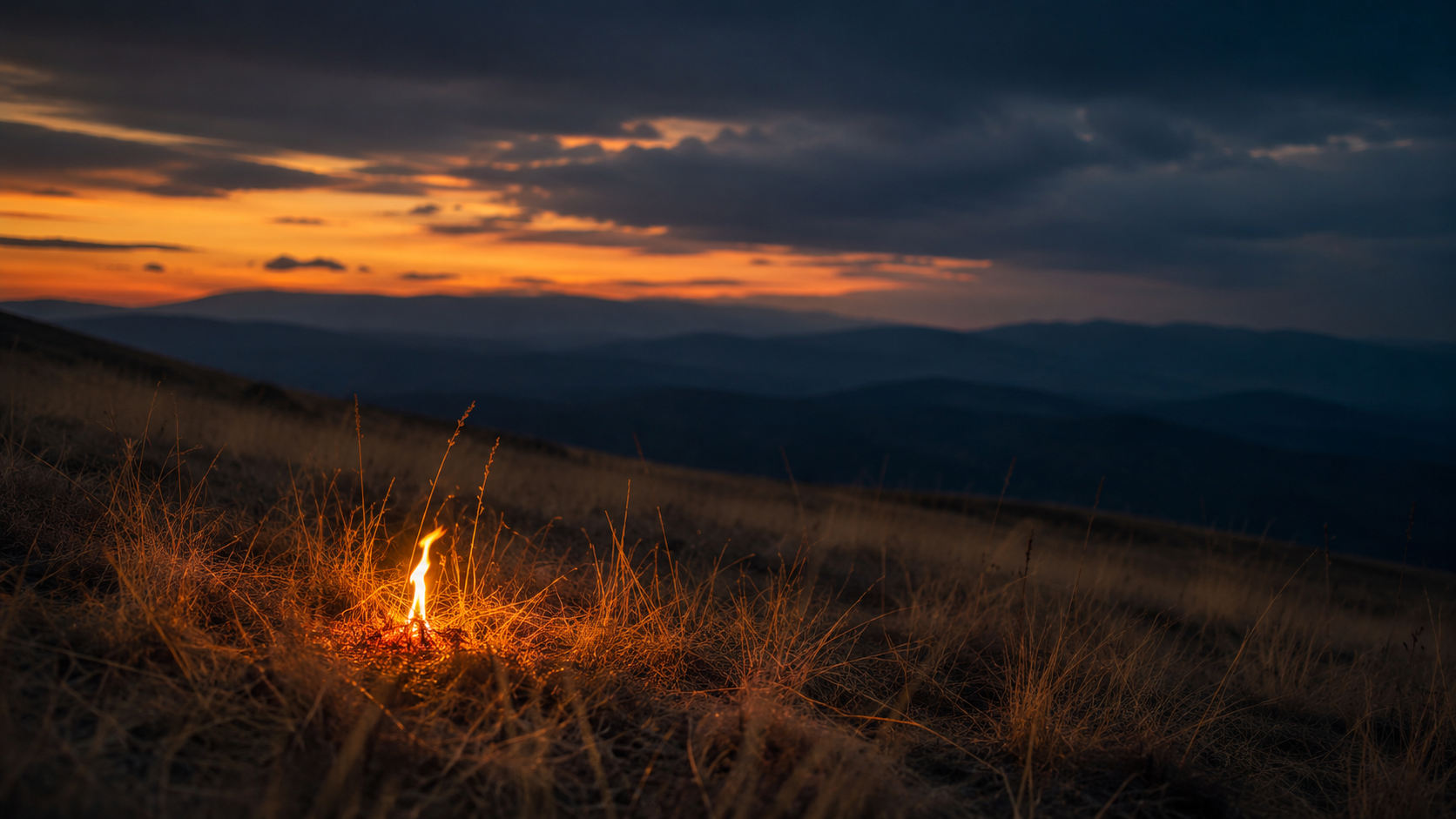
On the afternoon of August 5, 1949, fifteen smokejumpers parachuted into a remote canyon in Montana called Mann Gulch. They were the elite of the U.S. Forest Service, men trained to drop out of the sky onto wildfires and put them out before they could spread. The fire waiting for them in Mann Gulch that day was, by every initial assessment, routine. Roughly 55 acres. The crew expected to have a line dug around it and be eating breakfast by morning.
They were on the ground for less than two hours.
The wind shifted. The fire, feeding on tinder-dry grass on a steep slope, did something the men had a word for but had rarely seen. It blew up. In a matter of minutes, the fire exploded across the slope with terrifying speed. Of the 16 men (one man had reached the fire by boat) in that canyon, 13 didn’t come out. Before that day, no smokejumper had ever died fighting a fire.
The tragedy of Mann Gulch is that the crew faced something they first recognized as small.
This is the exact thing Paul is naming in 1 Corinthians 1:11-12, and we need to feel the weight of it.
When word reaches Paul about the church in Corinth, the report isn’t heresy. Nobody is denying the resurrection yet. Nobody has rejected the gospel. The report from Chloe's household is quarreling. Bickering. People saying "I follow Paul" and "I follow Apollos" and "I follow Cephas." It would have been easy for the Corinthians to wave this off. We aren’t divided over anything that matters. These are just preferences. Just personalities. Just the ordinary friction of a big church with a lot of strong voices.
But Paul doesn’t wave it off. He treats the small thing as the dangerous thing, because Paul knows what a spark does on a dry slope when the wind turns.
Here’s what we most need to see. Look closely at the names in the Corinthians' slogans. Paul. Apollos. Cephas. There isn’t a false teacher among them. Paul planted the church. Apollos watered it with gifted, eloquent preaching. Cephas, Peter himself, had walked with Jesus. These weren’t bad men. These were good gifts from God to the Church.
That’s precisely what makes the situation so dangerous, and so hard to catch in ourselves. Division almost never begins by choosing something evil. It begins by taking something genuinely good and quietly moving it to a place it was never meant to occupy. Heresy announces itself; you can see heresy coming up the slope. A good thing slowly becoming an ultimate thing makes no noise at all. It looks like loyalty. It looks like conviction. It looks like appreciation. Right up until the wind turns.
And if we’re honest, this isn’t just first-century Corinth. We do the same thing, and we do it with good things. A faithful preacher whose teaching has fed us. A worship style that genuinely moves us. A ministry model we’ve watched bear real fruit. A theological framework that’s brought real clarity. None of these is a bad thing. But every one of them can become a fifty-five-acre fire we aren’t taking seriously.
It starts as appreciation. It becomes alignment. It becomes identity. And by the time it has become "I follow Paul" instead of "I follow Christ," the thing we once simply enjoyed has become a slope we’ll defend, and the wind is already moving.
The mercy in this passage is that Paul writes it at all. He could’ve left Corinth to discover the hard way what a blown-up fire looks like. Instead he sends a letter while the fire is still small, while there’s still time to dig a line around it. That’s what grace does. Grace doesn’t wait for the fracture to finish. Grace names the crack while it’s still a crack. And the same Christ who sends the warning is the One who walks down into the canyon with us to put the fire out. He didn’t die to leave His church in the smoke.
Today: So here’s your assignment, and it’s a hard one. Name the small thing. Somewhere in your life there might be a fifty-five-acre fire you’ve decided is routine. A frustration with someone you’ve been quietly nursing. A cooling toward a person you used to be close to. A criticism you keep rehearsing in your head. A conversation you keep postponing because, after all, it’s not that big a deal yet.
The wind hasn’t turned yet. Don’t wait until it does.
Prayer: "Father, forgive me for the small fires I’ve called routine. Thank You that You send Your warnings in love. Give me the courage today to go to the person, to have the conversation, to dig the line while the fire is still small. In Jesus' name, Amen."
-PK